English
  Nederlands
  Deutsch
  Español
  Français
  Português
  Italiano
  Svenska
  Dansk
Dansk  Polski
  Suomi
Suomi Body-safe materials explained
Material is the one specification worth reading before price, colour or shape. It decides whether a toy can be properly cleaned, whether it lasts and what it does to skin.
The short version
Four materials are body-safe and non-porous: medical grade silicone, borosilicate glass, stainless steel and hard ABS plastic. They can be cleaned completely, they do not hold bacteria and they do not break down.
Everything else, and that mostly means TPE, TPR and the old jelly rubber, is porous. Porous is not automatically dangerous, but it cannot be sterilised, so it is a single person toy and it has a limited life.
Silicone
Silicone is the most used material for a good reason: soft, warm to the touch, completely non-porous and it tolerates boiling.
It has a slightly grippy, matte surface, so it wants lubricant. Use a water-based or a hybrid one, because silicone lubricant can soften the surface.
Quality varies. Good silicone has no smell at all. A rubbery or chemical smell means filler has been mixed in, and that toy is not what it claims to be.
Silicone attracts dust like nothing else, which is a storage problem rather than a hygiene one.
Glass
Glass toys are made from borosilicate, the same glass as laboratory equipment. It does not shatter from a knock on the bedside table and it survives the dishwasher.
Glass is completely smooth, so it needs far less lubricant than silicone, and it takes on temperature: a few minutes in warm water or in the fridge changes the whole sensation.
Inspect it before every use. A chip or a crack means it goes in the bin, not back in the drawer.
Stainless steel
Steel is the heaviest, the smoothest and the most durable of everything here. It is genuinely permanent and it holds cold or warmth for a long time.
Weight is the thing to consider. A steel plug feels completely different from a silicone one of the same size, and the weight is part of the appeal.
Look for surgical grade steel. Chrome-plated metal is not the same thing: plating can wear through.
ABS plastic
Hard ABS is what most bullet vibrators and many vibrator handles are made of. It is non-porous, easy to clean and it transmits vibration better than soft materials, which is exactly why powerful toys use it.
It is not the material you want for something large and insertable, because it does not give at all.
TPE, TPR and jelly
TPE and TPR feel soft and lifelike and are used for most masturbators and for cheap dildos. They are porous: the surface holds microscopic amounts of moisture and bacteria that no cleaner reaches.
That is workable if you follow three rules. One person only, never shared. Use a condom over it if you want to be careful. Replace it when the surface turns sticky or changes smell, which is the material starting to break down.
Store them separately. Two porous toys touching each other in a drawer will react and turn into a sticky mess.
How to tell what you are holding
Smell it. Real silicone is odourless. A strong plastic or rubber smell is TPE or a filled blend.
Read the wording. A description that says silicone-like, soft touch or body-safe material without naming one is not saying silicone.
Check the price against the size. A large dildo for a few euros is not silicone, because the raw material alone costs more.
Do not do the flame test you find on forums. Burning plastic is unpleasant and you learn nothing you cannot learn by smell.
Coatings and what they mean
Soft touch coatings on a plastic body are usually a thin layer of silicone paint. They feel lovely and they wear off, which is normal, not a defect.
Realistic skin materials in sleeves and strokers are almost always TPE and need dusting with cornstarch after washing to stay soft. Talc is the old advice and is best avoided.
Waterproof ratings are about the seal, not the material. A silicone toy is not automatically waterproof.
Where to start in our range
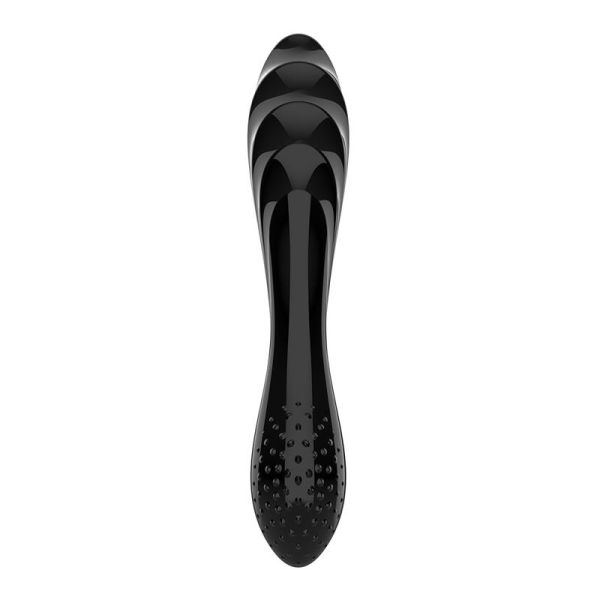
Good places to start among what we have in stock: Lovetoy Dual Layered Platinum Silicone 7", SilexD Dual Density Mod. 1, Lovetoy Twilight Gleam and Satisfyer Dazzling Crystal 1. The current price and stock are always on the product page.
Frequently asked questions
How do I know if a toy is real silicone?
Smell and price. Genuine silicone has no smell at all, while TPE and filled blends smell of rubber or plastic. If a large toy costs very little, the material is not silicone. A description that avoids naming the material and only says body safe is a warning sign.
Are porous toys unsafe?
Not inherently, but they cannot be sterilised. Use them with one person only, put a condom over them if you want to be careful, and replace them once the surface becomes sticky or smells different. Non-porous silicone, glass, steel and ABS have no such limitation.
Can I boil my toys?
Pure silicone, glass and stainless steel without electronics can be boiled for a few minutes. Anything with a motor, a battery or a charging port cannot: wash those with soap and water or with a toy cleaner and never submerge them unless they are stated to be waterproof.
Which material is best for temperature play?
Glass and stainless steel. Both take on warmth or cold in a few minutes and hold it. Warm water from the tap and a few minutes in the fridge are enough; never use the freezer, boiling water or a microwave for this.
Why did my two toys melt together in the drawer?
Because both are porous and the plasticisers in them reacted with each other. It happens with TPE, TPR and jelly. Store porous toys separately, each in its own bag or pouch, and keep them away from silicone.