
 English
  Nederlands
  Deutsch
  Español
  Français
  Português
  Italiano
  Svenska
  Dansk
Dansk  Polski
  Suomi
Suomi Collars & Leashes
Adjustable, padded where it touches, with a detachable lead so the collar can stay on afterwards. The width is what you feel: a broad collar spreads pressure and sits still, a thin one moves with every turn of the head and marks faster. Two fingers should fit between the collar and the neck, and that is not a guideline but the limit, because nothing here is designed to restrict breathing and no collar should ever carry weight or take a hard pull. A detachable lead matters more than it sounds: it lets the collar become something worn under a shirt long after the rest is back in the drawer. Vegan leather softens with wearing, neoprene forgives more, and a locking clasp is for looks rather than security.
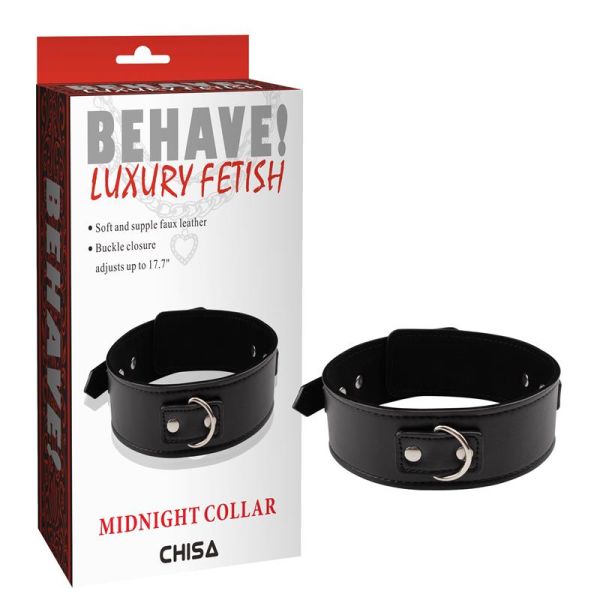
Chisa Collar (Midnight)

Cut4men BL4CK08 C-Ring Body Collar Blackleatherlike One

LateToBed Neoprene Collar Adjustable
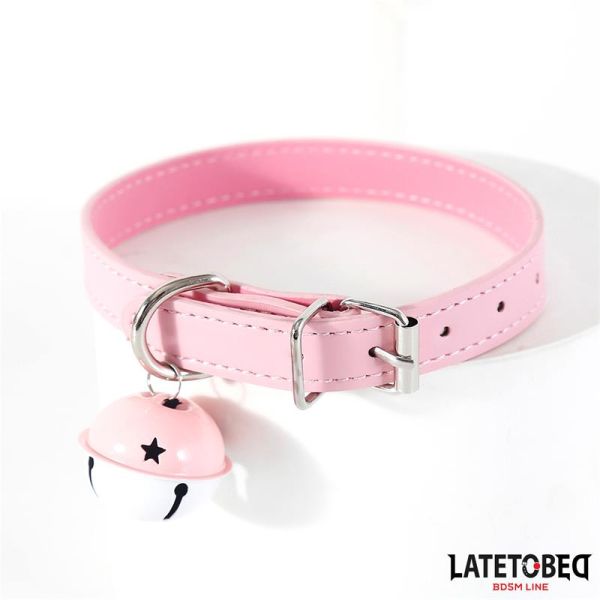
LateToBed Collar with Bell Adjustable (Pink)
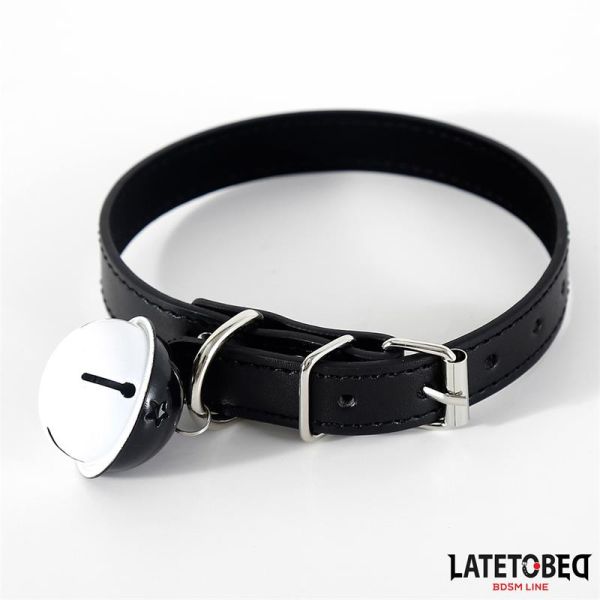
LateToBed Collar with Bell Black Adjustable
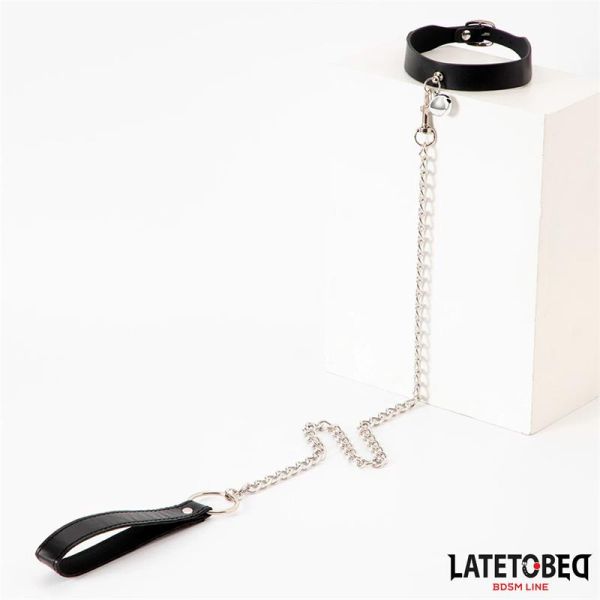
LateToBed Collar with Bell and Leash
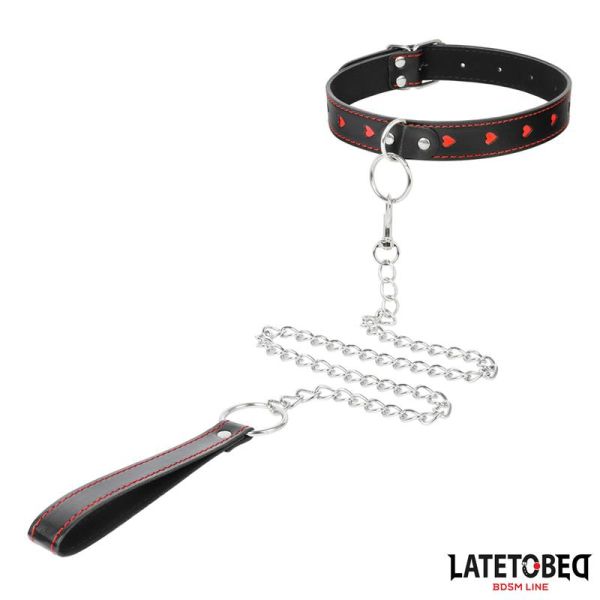
LateToBed collar with Leash 52 cm

LateToBed Collar with Nose Hook

Midnight Desires Collar and Wrist Cuffs Body Restraint Set

Midnight Desires Restraint Set with Collar with Leash and Cuffs

LateToBed Collar With Metal Leash Padded Interior

Midnight Desires Collar and Ankle Cuffs with Chain

LateToBed Collar with Restraints Adjustable (Black)

IntoYou Glow in the Dark Collar with Leash

Chisa Collar with Leash for couples
A collar is the simplest piece of bondage there is, and the one with the most meaning: a band around the neck says something about who belongs to whom before anyone touches anything. Add a leash and the person holding it steers. This guide covers the styles, from a soft day collar to a locking posture collar, how to fit one, and the one safety rule that matters more than all the others.
Styles
Day collars are slim bands or chokers, often in leather or a soft fabric, made to be worn in public without reading as anything but jewellery. Play collars are wider, in leather, faux leather, neoprene or fur, with a D-ring at the front for a leash and often a buckle that takes a small padlock. Posture collars are tall and stiff, and hold the chin up. Puppy collars are the dog collar kind, with a tag and a strong ring. Chain collars are cold, heavy and loud, for the sound and the weight.
Fit
Two fingers should slide between collar and neck when it is done up. Measure the neck with a tape and check the range on the product page; most collars adjust over several holes. A collar that is tight is a collar that is dangerous, and a collar that is loose spins and chafes.
The rule
Never pull, hang, lift or drag by a collar, and never attach a leash to anything but a hand. The neck carries the airway and the arteries to the brain, and a hard pull on a collar can injure or kill. A leash is for leading, at walking pace, with slack in it; the tug is symbolic. Anyone wearing a collar must be able to speak or signal, and be able to get out of it.
Leashes
Chain leashes are heavy and make a noise on every step; leather and nylon are quiet and lighter. A short leash of a metre keeps the wearer close; a long one gives room to crawl. The clip should be strong and easy to open with one hand.
Care
Wipe leather with a damp cloth and condition it now and then; faux leather and nylon wash with mild soap; wash fur collars by hand and dry them flat. Dry the metal rings so they do not tarnish.
Frequently asked questions
Which collar first?
A play collar in faux leather with a D-ring and a buckle, around 4 centimetres wide. Comfortable, adjustable, cheap, and it takes a leash and a padlock.
Can I wear it all day?
A day collar, yes; a play collar, for a few hours if it is soft and fits. Take it off to sleep.
How tight should it be?
Two fingers flat between collar and neck. Tighter is unsafe; looser spins.
Is a padlock safe?
A small padlock on the buckle keeps a collar on until the key holder removes it; keep the key where it can be reached in an emergency, and never lock a collar on someone who is alone.
Can the leash be pulled?
Gently, as a signal, with slack in it. Never a hard pull, and never on anyone who cannot follow.